Membership Engagement Committee members share their sage advice to their younger selves
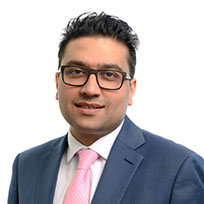
Mohammad Bilal, MD
Associate Professor of Medicine at the University of Minnesota
Associate Program Director of Gastroenterology Fellowship
You only do fellowship once. Don't stress yourself about endoscopy skills, no one expects you to know how to scope when you start, and everyone learns how to scope as long as you show up, pay attention, watch videos and read, and don't compare yourself to others. Only compare yourself to yourself, and as long as you are improving, that's progress. Enjoy the journey. Mohammad Bilal, MD
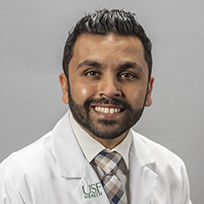
Pushpak Taunk, MD
Advanced Endoscopist at University of South Florida/Tampa General Hospital
Lifelong Learner
You will get to the cecum. I promise. As fellows, we always worry about our ability to get there. Even after being in practice for 10 years, I will come across a colonoscopy that I can’t complete. Focus on learning good technique and spend time in the endoscopy suite doing as many procedures as you can, it will eventually click. There are many resources available, including on the ASGE website and GI Leap, which can help you navigate learning the basics of colonoscopy.
GI fellowship is busy and figuring out what/when to read is hard. Each of the major societies (ACG, ASGE, AASLD) have come out with guidelines on every topic that will give you a base for building your knowledge. There are also a few pocketbooks that can be helpful (i.e., Yamada's Handbook of Gastroenterology). I would read a short brief on a particular topic during your workday. Trying to read after a long day is tough and generally less effective for retention.
In the beginning when seeing consults, you will learn to decipher who you need to scope and who you can manage medically. After honing those skills, don’t forget that it’s not just about doing the procedure. Teams are looking for your expertise, so remember to continue providing broad differentials (when applicable), discuss various other testing modalities and focus on what else you can do to help the patient, besides just doing a procedure.
Spend time exploring all aspects of gastroenterology. You never know where you will end up and what skill set might be required for the job. If there is an area within GI that is not available at your institution, you can reach out to other institutions to set up a rotation and gain further exposure. Even if you are a budding advanced endoscopist or IBDologist, being comfortable with all aspects of GI will give you flexibility when looking for a job. It will also make you a better gastroenterologist.
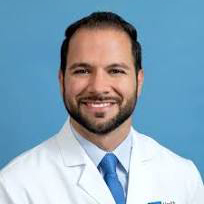
Danny Issa, MD
Assistant Professor of Medicine, University of California, Los Angeles
UCLA Health
The principles of success remain the same as what got you to this point. Work hard, try to do that extra case or see that additional consult—you will be surprised at what you learn, be curious and ask questions, be open to learning from everyone around you (including nurses, techs, device reps and your co-fellows), attend conferences to grow not only your knowledge, but also your professional network. Most importantly, don’t forget about the patient. Despite being in a procedural specialty, your cognitive skills, humanistic touch and ability to listen to patients will ensure that you develop the healing hands of a gastroenterologist.
Invest your time and energy into the connections with your attendings and co-fellows. These relationships are very likely to be lifelong and will help you grow in your career beyond the fellowship years, as well as enjoy the journey.
Never try to block or say no to consults. Even the most seemingly straightforward questions might have plenty of learning opportunities. Also, it always comes back to you.
"I don't want to bother you" is a wrong way of thinking about addressing consults or questions when you round with your attendings.